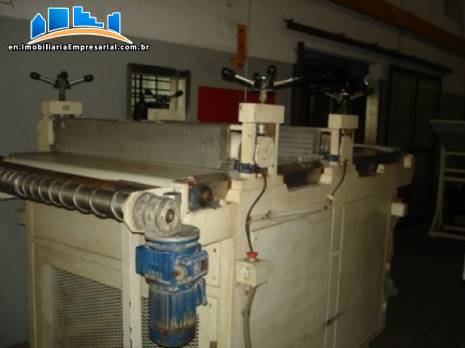
In the food industry, especially in the industrial-scale candy and confectionery industry, forming/molding rollers are essential equipment for processing pasta. They are used to roll, shape, and adjust the thickness of sweet doughs, pastes, and other malleable compounds.
TYPES OF FORMING/MODING ROLLS
1. Forming Rollers (or Rolling Rollers)
Function: Reduce dough to a uniform thickness.
Materials: Stainless steel, with nonstick coatings.
Configurations: 2 or more rollers with adjustable pressure and distance.
Example use: Roll caramel, fondant, gum, or moldable chocolate.
2. Forming Rollers (or Molding Rollers) with Cavities
Function: Mold products with specific shapes.
Operation: These rollers have notches or reliefs to cut or form shapes as the dough passes through.
Example of use: Cookies, molded candies, and shaped candies (hearts, stars, etc.).
3. Texturizing Rollers
Function: Create reliefs or textures on the surface of the dough.
Application: Decorative candy dough, such as fondant or artistic candy dough.
4. Continuous Roller Rollers with Tracks
Function: Form and transport the laminated dough to the next production step (such as cutting, drying, or cooling).
Used with: Continuous production lines.
5. Compression and Extrusion Rollers
Function: Compact and mold dough into specific shapes before cooling.
Example: Chewy candies, condensed milk candies, dried fruit paste.
PRODUCTS MADE BY THE ROLLING + CYLINDER SHAPE PROCESS
Below is a list of the main industrial products made by rolling followed by forming with forming cylinders:
Product Process Description
Caramel Candies: Heated dough → rolled → shaped by a hollow cylinder → cut
Chewy Candies (Toffees, Fudges): Cooled dough → rolled → shaped → packaged
Gum and Chewing Gum: Gum mixture → rolled → shaped roll molding
Cookies and Biscuits: Laminated sweet dough → shaped with engraved cylinders → baked
Fondant: Sugar paste → thin rolled → texturing/shaping
Gelatin or pectin molded candies: Gelatinous dough → cooled → pressed in forming cylinders (or molds)
Pressed fruit sweets Concentrated fruit mass → laminated → molded and cut
Dulce de leche in batter (such as "pulp-pulp") Cooked dough → laminated → molded by a cylinder or rotary cutter
Molded marshmallows Extruded or laminated dough → molded and cut
Sweet bakery doughs (croissants, rolls, etc.) Laminated dough with filling → molded by cylinders/roller → fermentation/oven
ADVANTAGES OF USING FORMING CYLINDERS
Standardization of the final product.
Increased productivity.
Reduced waste.
Easy integration into automated lines.
High-speed, accurate shaping. |